The retention period of a delivery note is not the same for all companies: it depends on the function of the document and the accounting, tax and commercial obligations that apply. Depending on the case, a delivery note can be considered as supporting documentation, or simply serve as proof in the event of a dispute. Receipt or payment of the invoice therefore does not mean that the delivery note can be destroyed. This question particularly concerns supplier delivery notes. This article summarizes the deadlines to be aware of and explains how to organize archiving, including in digital format.
Summary
The shelf life of a delivery note depends on its function:
- Accounting supporting document: 10 years
- Tax obligation: in principle 10 years
- Delivery note without accounting document function: in principle 5 years, as proof in the event of a dispute
- Electronic contracts with consumers, from €120: 10 years
- Digital delivery notes: in principle, same deadlines, with reliable archiving
- AI: it can facilitate classification and archiving, but the responsibility remains that of the company
There is therefore no single deadline for all delivery notes.
How long should delivery notes be kept?
The retention periods for delivery notes depend in particular on the function of the document and its usefulness as accounting evidence. For other commercial documents which do not fall under the obligation to retain accounting documents, other deadlines may apply depending on their nature and their legal usefulness. There is therefore no single deadline.
Accounting supporting document: 10 years
When a delivery note is used to justify an operation recorded in the accounts, it is part of the supporting documents. It must then be kept for 10 years, like the accounting books and invoices. This deadline constitutes the reference to remember.
Tax obligation: 10 years
Documents and items likely to be subject to administrative control must in principle be kept for 10 years. A delivery note may be concerned when it constitutes proof necessary for this control. It thus also corresponds to the accounting deadline.
Note
This period was extended from 6 to 10 years by the law of June 25, 2026 relating to the fight against social and tax fraud. It applies to documents whose retention period expires after January 1, 2027.
Commercial prescription: 5 years
For commercial documents which do not fall under the obligation to retain accounting documents, the useful life depends on their function. The general limitation period for obligations arising from trade is 5 years, whether the dispute is between traders between them or a trader against a non-trader, unless special provisions apply. A delivery note can be used as proof during this period.
Electronic contracts with consumers: 10 years
A contract concluded electronically with a consumer from €120 must be kept for 10 years. In the event of immediate execution, the 10 years run from the conclusion of the contract. Otherwise, the contract is retained until delivery or execution, then 10 more years.
When is a delivery note considered an accounting document?
A delivery note serves as an accounting supporting document when it is necessary to justify or document an operation recorded in the accounts. This may particularly be the case when it makes it possible to document the reality of a delivery or to verify the elements of a recorded operation. For example :
- The delivery note allows you to justify receipt or shipment of the goods.
- It is used to check the quantities or references corresponding to a recorded operation.
- It is kept with the other documents used to justify an accounting entry.
The name of the document is therefore not enough to determine its retention period: it is its function that counts. An invoice subsequently issued with identical information does not automatically mean that the delivery note can be destroyed.
Supplier delivery notes: what should you keep?
Supplier delivery notes are often used to control purchase invoices. They make it possible to verify that the invoiced goods have been delivered, in the quantities and with the planned references. When they fulfill this function, they must be kept for 10 years, with the purchase invoices and other documents of the operation.
In practice, it is recommended to:
- Reconcile each delivery note with the corresponding purchase invoice
- Archive both documents together
- Note any discrepancies noted upon receipt (quantities, damaged products)
- Do not destroy a delivery note just because the invoice has been received or paid
Does the company’s accounting system influence the retention of delivery notes?
The legal form or the method of determining the result are not sufficient to determine the obligation to keep a delivery note. What matters is the concrete role of the document in the company’s accounting organization.
For a company that keeps commercial accounts, the delivery note can constitute a supporting document when it documents a recorded transaction. Companies under a simplified regime may also have to keep delivery notes when they are used to justify an operation or document a transaction. In all cases, the actual use of each document should be examined.
Tip: Manage your Office documents
With IONOS HiDrive Next online storage, store, edit and share your Office documents centrally and securely. Whether private or professional: work flexibly from any device thanks to the HiDrive Next app and other interfaces. Your data is optimally protected in IONOS’s state-of-the-art German data centers.
What rules apply to digital delivery notes?
Keeping a delivery note in digital form does not, in principle, modify the applicable duration: 10 years when it constitutes an accounting supporting document and to comply with tax obligations. Documents subject to control by the tax administration and received or established on computer media must in particular be kept in this form during the applicable tax period (article L102 B of the Book of Tax Procedures).
For digital archiving to be reliable, the company must ensure the following points:
- Documents are stored in such a way as to preserve their integrity.
- They stay readable throughout the shelf life.
- They can be converted for the management of the company, provided that you also keep the original.
- Their access and search are possible under suitable conditions.
- They can be products in the event of an inspection or need for justification.
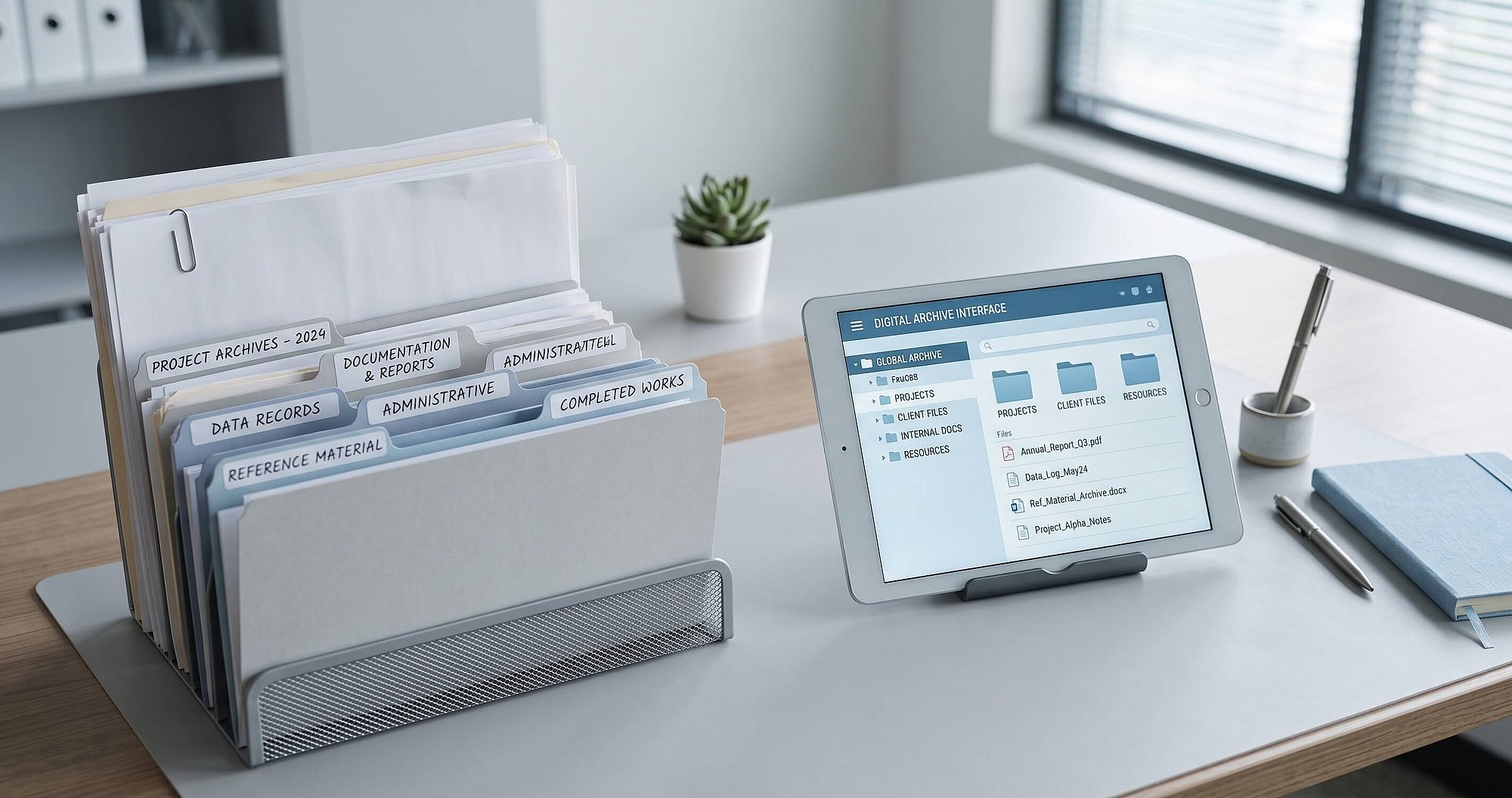
Simply storing it in an inbox or computer folder may not be enough. When the delivery note constitutes a supporting accounting document, it is preferable to archive it with the documents which justify the operation concerned. This organization falls under records management.
Electronic invoicing: what changes in 2026 and 2027
There electronic invoicing reform modifies the management of documents related to deliveries. Since September 1, 2026, all companies subject to VAT and established in France must be able to receive electronic invoices. Issuance has been mandatory since this date for large companies and mid-sized companies (ETI), then from September 1, 2027 for SMEs, VSEs and micro-enterprises. It is therefore useful to organize the joint archiving of electronic invoices and delivery notes now.
Manual control of many delivery notes can be particularly time-consuming for small and medium-sized businesses (SMEs). In particular, it is necessary to be able to identify the documents that serve as supporting accounting documents and determine the retention rules that apply to them.
Systems based on artificial intelligence can help automate some of these tasks. In particular, they can recognize and classify documents, extract their main information and associate them with the corresponding operations or documents. AI can thus facilitate the classification and archiving of delivery notes, but it does not alone determine the applicable legal obligations.
In a medium-sized commercial company that receives many delivery orders daily, an AI system could, for example, work in the following way:
- A new delivery note is automatically detected and imported into the archiving system.
- The system analyzes information such as the supplier, item references, quantities or invoice reference.
- The system classifies the document according to predefined categories.
- It can then propose an archiving category and a retention period based on previously defined rules.
- The document is archived in such a way that it remains accessible and usable for the entire applicable retention period.
Such automation can be particularly useful to SMEs, as it reduces the manual work of filing numerous documents. It can also facilitate the subsequent search for a delivery note and help to consistently apply internal archiving rules.
However, AI does not determine legal obligations alone: the responsibility remains that of the company. The classifications and durations proposed must therefore be checked.


What is the risk of a company that does not keep its delivery notes correctly?
Failure to comply with retention obligations can cause difficulties during tax audits. Missing, incomplete or unobtainable documents make it difficult to justify business transactions and can lead to tax or accounting risks. They can also deprive you of proof in the event of a dispute with a supplier or customer.
Companies should therefore regularly check:
- Which delivery notes are subject to a retention obligation
- What duration applies to each document
- If the documents are archived in such a way as to remain accessible, readable and usable for the entire required period
Structured, digital document management makes it easier to classify, find relevant documents and meet deadlines.
Please consult the legal notices in force on this article.